Can we have a conversation about data centers? No, I’m not talking about the siting of data centers, which seems to be quite the discussion over the past six months at the national, state, and local level. I will leave that topic for another day. But without a single “hyperscale” data center in operation or under construction in our region, Greater Peoria is feeling the positive impact of this industry’s massive growth elsewhere.
The term “data center” gets thrown out a lot and usually with a negative connotation. But using the term “data center” is just as broad as using the term “car.” There are lots of different types of data centers. They use terms like enterprise, edge, cloud and hyperscale. All of us benefit from data centers every day. It’s how we watch TV, connect with friends, write emails, and share pictures. It’s how you are reading this newsletter article. Regardless of the type of data centers, they all have common elements: they are buildings that are filled with servers that are made up of chips and those buildings need massive electrical and back-up electrical systems. Data centers as a term might seem a monolith, but it is a series of components. And those components need to be made by someone. Increasingly, we are seeing those components being made right here in Greater Peoria.
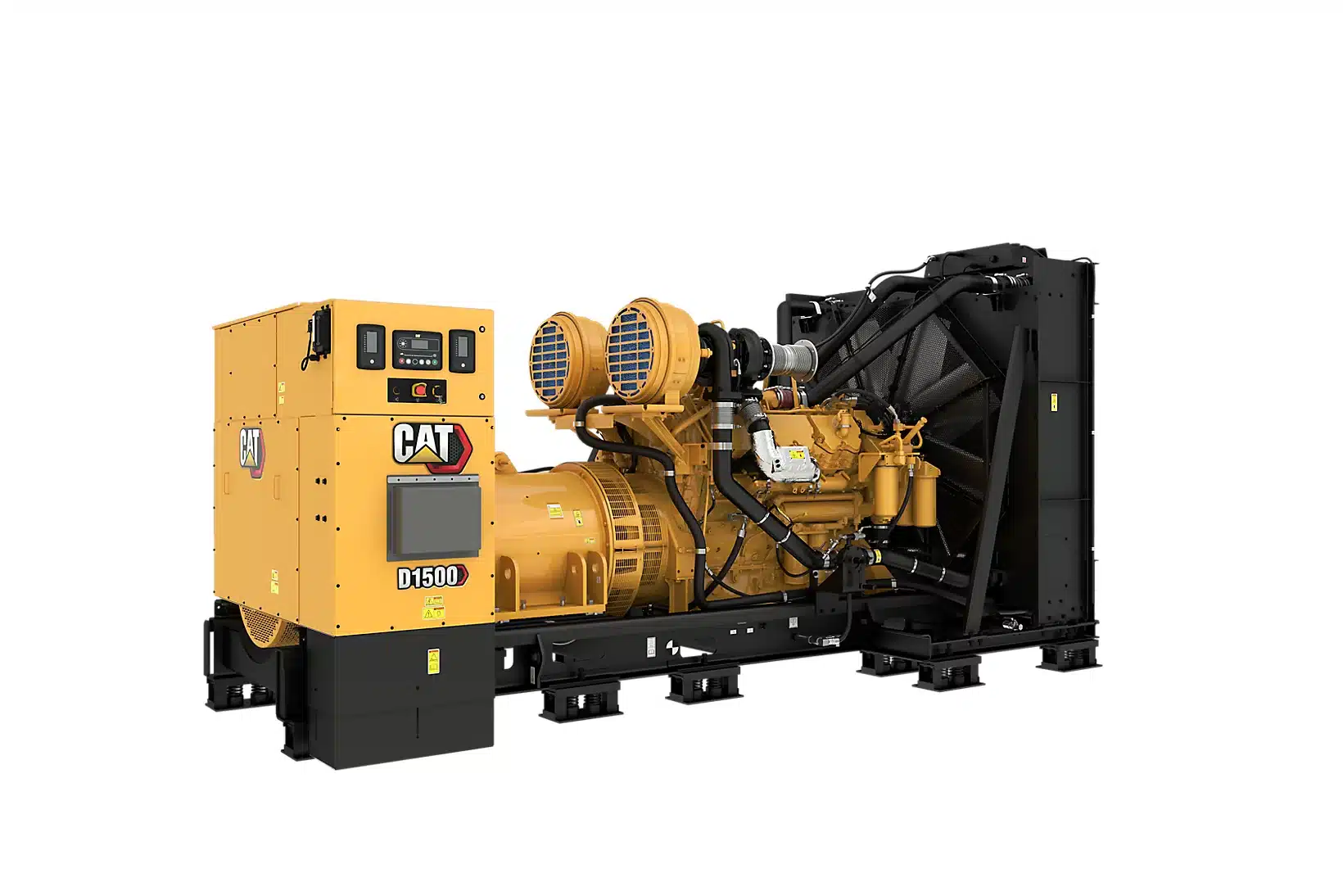
The local “big dog” in the data center conversation is Caterpillar. Data centers cannot afford to be without power so they include backup power systems, typically diesel generators, to ensure consistent operation. While Caterpillar is often thought of as a maker of construction and other “off-highway” machinery, a larger and larger part of its portfolio is gen sets. In its second quarter 2026 report, Caterpillar said sales in its “Power and Energy” areas increased 18% year over year to $8.2 billion. While the finished product isn’t assembled here in the Peoria area, the Mapleton foundry has everything to do with the construction of the engines that make a generator a generator. And of course, much of the design for these systems happens in Mossville, parts are distributed from Morton, and back-office functions across the region support the whole operation.
It isn’t just Caterpillar, though. In February of this year, Wisconsin-based Generac acquired East Peoria-based Enercon. Enercon designs and manufactures custom power equipment and industrial enclosures for demanding, high-reliability applications. Like Caterpillar, Generac has a growing footprint in the data center power market. From their press release: “The acquisition is … part of its effort to double product sales in the years ahead. Backup power generators sold to the data center market are expected to be a primary driver of this rapid growth.” Unsurprisingly, Enercon is looking to hire nearly 100 people in the next 12 months.
There is work beyond diesel generators, too. Data centers need all that electricity for two main reasons: to power the chips and servers, and to power the systems to cool those chips. That’s why Morton Industries, a fabrication company specializing in metal tubes, bought and renovated a new building in East Peoria. They took their expertise in making things like hydraulic pump parts, structural tubing, and other cylindrical parts and realized they could also make the stainless steel tubes that are a key part of on-chip cooling systems. Like Enercon, Morton Industries is hiring at least 100 people in the next year (for both the existing and new operations).
The list continues. Hardin Industries in Lacon makes electrical enclosures used in smaller data centers. Eaton in Lincoln makes electrical components. SMF in Minonk fabricates parts like bases, skids, and frames that go into gen sets. Altorfer, with locations in East Peoria and Bartonville, provides power generation sales and service to the data center industry. And, of course, the chips within data center servers are composed of a variety of rare earth minerals. The machines that mine those elements are designed and built right here in Greater Peoria by Caterpillar and Komatsu. If you are reading this and I missed your company’s role in the industry, please drop me a line.
For the last century, Greater Peoria has been the earth-moving capital of the world, with a deep and rich supply chain and manufacturing prowess to support an important industry. But those same capabilities are being put to use in a rapidly growing market with tons of opportunities. It’s a great example of economic resiliency through diversification. Our companies, and the people who work there, are finding new customers to broaden their reach. So the next time you binge-watch your favorite Netflix show, you can know that it was made possible in part by Greater Peoria.